2026 Open Enrollment

This is the first year that the Centers for Medicare & Medicaid Services (CMS) has included data on how many ACA Open Enrollment Period enrollees selected policies with the help of certified insurance broker, agent or assister (such as ACA Navigators or Certified Assistance Counselors (CACs).

Next up: Age brackets, gender, racial/ethnic groups and urban/rural communities. I'm also throwing in the stand-alone Dental Plan table here for the heck of it since I don't know where else to include it.

Nationally, there hasn't been that much of a shift in the enrollment breakout by age bracket...but within each bracket there's a couple of takeaways:

  • As expected given the subsidy expiration, enrollment among young adults plummeted (down 7.4% & 8.5% among 18-25 yr olds & 26 - 34 yr olds respectively). This will absolutely have a disproportionate negative impact on the risk pool (and, thus, gross premiums) next year
  • On the other hand, enrollment of children actually increased by 3.4% year over year, which I wasn't expecting at all.
  • I was also surprised to see that enrollment among seniors inched up ever so slightly (about 0.4%, or 1,500 people). Huh.

At the state level:

Next up: Premiums, Advance Premium Tax Credits (APTC) and Cost Sharing Reduction (CSR) assistance.

Nationally, the average unsubsidized premiums for 2026 exchange-based Open Enrollment Period enrollees are $741/month, up $122/month or 19.7% from last year.

This is a smaller average gross increase than the 25.5% I had projected last fall...for two rather obvious reasons, which I try to make clear every year:

Now it's time to move on to the actual demographic breakout of 2026 Open Enrollment Period (OEP) Qualified Health Plan (QHP) enrollment.

First up: Breaking out new enrollees vs. existing enrollees who either actively re-enroll in an exchange plan for another year or who passively allow themselves to be automatically renewed into their current plan (or to be "mapped" to a similar plan if the current one is no longer available).

Nationally, 15.6% of all exchange QHP enrollees were new this year. The other 84.4% are current enrollees who signed up for another year.

Fortunately, more enrollees took my advice and actively re-enrolled this year (46.3% vs just 39% last year). Unfortunately, 38.1% still allowed themselves to be passively auto-renewed. Those are the ones who, in many cases, were likely hit with massive sticker shock as they were auto-renewed into a plan which probably had dramatically higher premiums due to the enhanced tax credits expiring...over 8.8 million enrollees nationally.

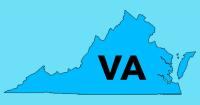
The Virginia Insurance Marketplace has published raw Open Enrollment Period data for 2026; let's take a look at how it compares to last year's OEP:

Here's the overview of Virginia ACA exchange enrollment over the course of OEP 2026 vs. 2025. Stand-alone dental plan enrollment is up 2.3%, which is nice, but overall major medical plan (Qualified Health Plan, or QHP) enrollment dropped by nearly 19,000 people, or 4.8% year over year.

There's also 14% fewer enrollees receiving federal tax credits than last year (nearly 47,000 people), while another 15% lost Cost Sharing Reduction assistance (CSR).

via NY State of Health:

  • Centers for Medicare & Medicaid Services Approves New York’s Request to Transition Back to Basic Health Program Authority
  • Approximately 450,000 New Yorkers Will Become Ineligible for the Essential Plan Beginning July 1, 2026, and Will Instead Be Eligible for Qualified Health Plans

ALBANY, N.Y. (March 23, 2026) - The New York State Department of Health provided an update following federal approval from the Centers for Medicare & Medicaid Services (CMS) of the State’s request to terminate its Section 1332 State Innovation Waiver and return to Basic Health Program (BHP) authority.

The transition preserves Essential Plan coverage for approximately 1.3 million New Yorkers with incomes below 200 percent of the federal poverty level.

A few weeks ago I noted that the first hard data on effectuated ACA marketplace enrollment (as opposed to how many people selected plans) had started to come in from a handful of states...Maryland and Massachusetts in particular. While the data is still sparse, the early trendlines are already starting to show up:

For months now I've been warning that the initial data published about the 2026 ACA enrollment would likely massively underestimate just how ugly things were in terms of both effectuated enrollment as well as how comprehensive the coverage would be for those who did enroll.

Back in December, when Open Enrollment was still going on, I noted that regardless of what the official number of Americans who selected an exchange plan during Open Enrollment was, the actual number of those who would have effectuated coverage over the course of the year would likely be far lower:

So, what will this graph look like for 2026?

...IF that's what ends up happening, it would look something like the following:

Via HealthSource RI:

HealthSource RI Open Enrollment 2026 closes with falling enrollment trend

Mar 9, 2026

PROVIDENCE, RI – HealthSource RI (HSRI) concluded its annual Open Enrollment (OE) period January 31, with enrollment totals and the mix of plan selections bearing out expectations, as customers faced increased monthly costs upon the expiration of enhanced federal premium tax credits. Individual and Family enrollments totaled 38,557 during this Open Enrollment, a 10-percent decline from the record-high close of OE2025 (42,695). Overall enrollment decreased by 20% from year-end (48,060) to the end of OE, a highly unusual development, as the marketplace has recorded growth nearly every year in that same span.

Pages

Advertisement